

Imagine a world where the hardness of a gemstone bends to the will of light, aerospace metal titanium is draped in the colours of a butterfly, and ancient Eastern philosophy and the influence of time in all its essence is crystallised into dazzling, sometimes wearable sculpture. This is the world of Wallace Chan.
Born 1956, in Fuzhou, China, Chan began training as an apprentice gem stone carver at the age of sixteen setting up his own workshop in 1974. He prizes himself on innovation, creating his own carving tools and his own signature carving technique called the ‘Wallace Cut’ which he invented in 1987. His creations, which he views as a single, continuous artistic practice, move fluidly between the tiny, wearable sculptures of his famed butterfly brooches to monumental installations, echoing his core belief: “Everything, big or small, is infinite.”

Image credit: Wallace Chan, ‘Birthday Sculpture’ as part of ‘Vessels of Other Worlds’ at Long Museum.
In his work, spirituality is not only a core theme but a process; his materials, which range from gems to the steel-strong porcelain – which he invented – are viewed as living entities with a profound, universal language. His pieces are not just to be showcased as objects of luxury but as meditations on existence, culture, and the delicate balance between the macrocosm and the microcosm.
As the first contemporary Chinese jewellery artist to be collected by institutions such as the British Museum, Chan stands today as a modern day Renaissance figure in the art world. He is a master craftsman, sculptor, philosopher and inventor.
Having been invited to preview one of the exhibition sculptures in Shanghai, we sat down with Chan to delve into the depths of his creativity. Discussing his journey, his struggles, the curiosity that led to innovation and how the race of time fuels his artistry.
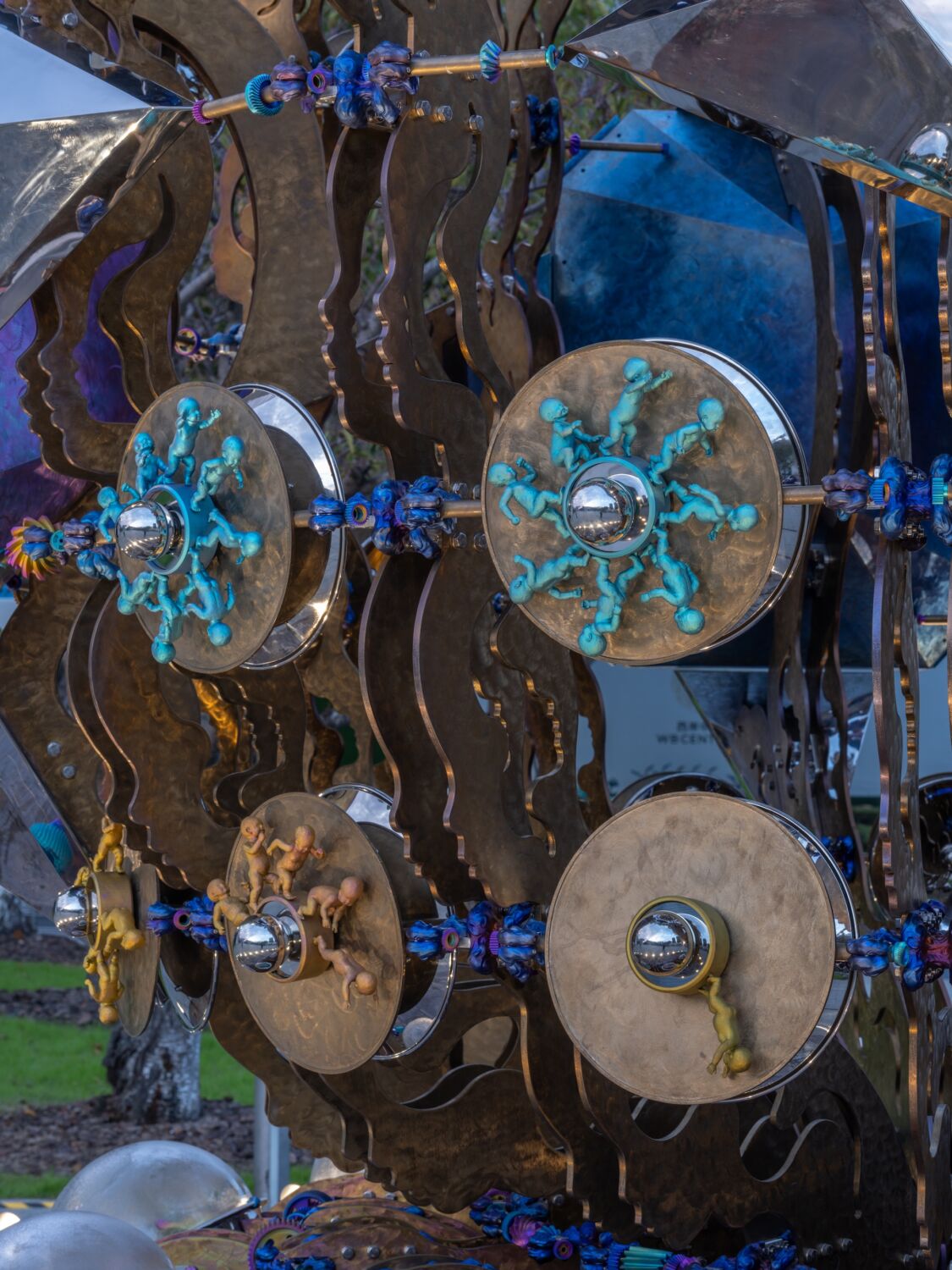
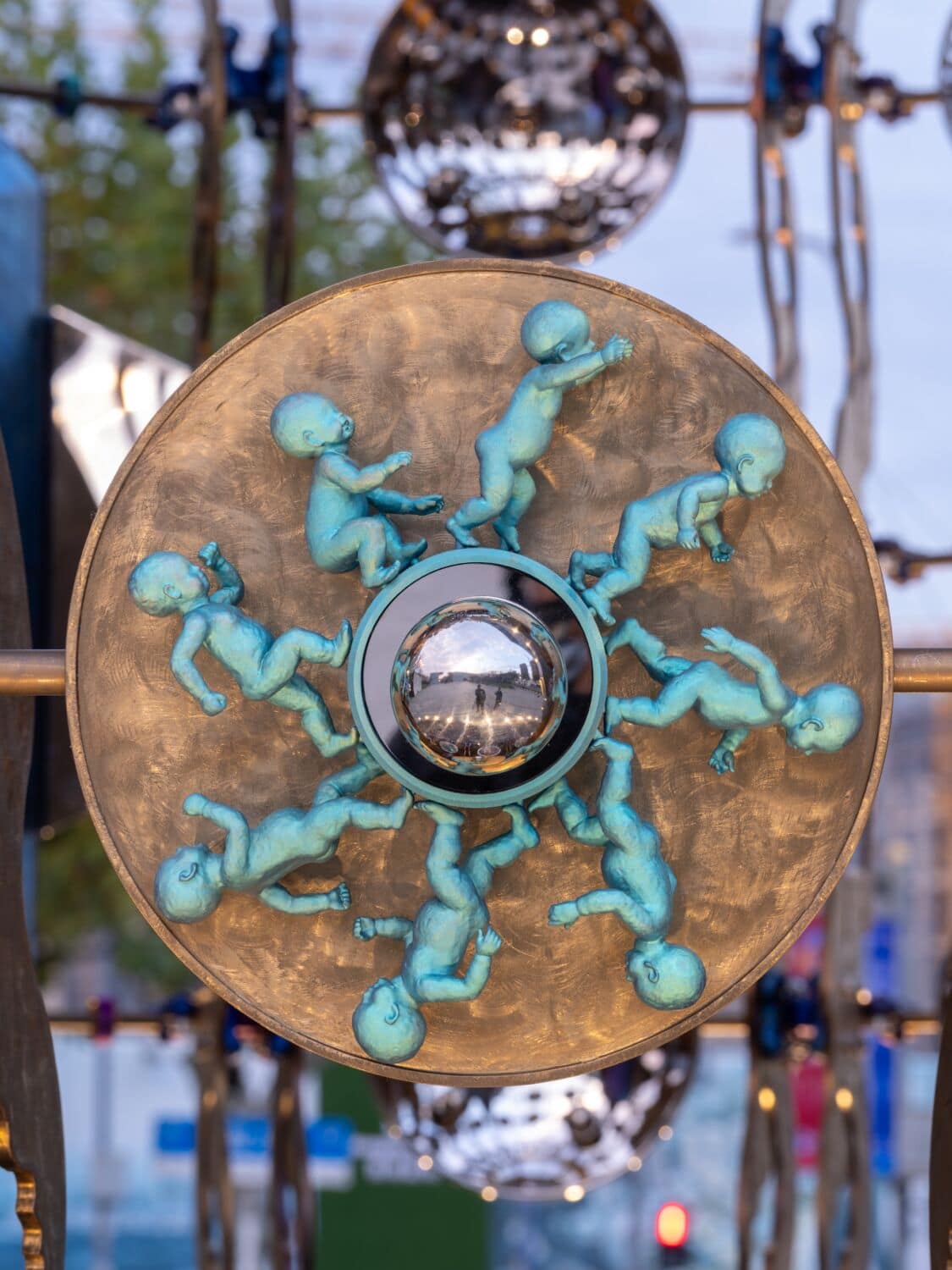
Image credit: Wallace Chan, ‘Birthday Sculpture’ (details) as part of ‘Vessels of Other Worlds’ at Long Museum.
Bethany Berkeley: What are some of the triumphs and struggles you’ve had over the years coming up as a self trained artist?
Wallace Chan: I’ve had more space to explore my own freedom and my own ignorance. It’s better to be in the dark than to know a lot. I never had a teacher or formal training, so I ended up using a lot more time and resources to create my works. When I created my first piece I had already gone through a lot of highs and lows but that in turn gave me the freedom I needed to create the next piece.
BB: Talk to us about the ‘Wallace Cut’, What about this design process makes it intrinsically Wallace Chan?
WC: I invented the Wallace Cut in 1987. The challenge was to create something out of nothing, out of emptiness. It’s all about the technique, the process of removing what I didn’t want from the gemstone to keep what I did. Everything was done with precise calculations using my own carving tool that I created. The first cut I made on the stone was the nose of the goddess and from there I created the whole face, which reflected into four more faces on each side.
The technique had to be done underwater, which meant I couldn’t see clearly and had to take the stone out each time to make sure there were no mistakes. There were a lot of trial and error moments before I got it right.The cut came from nothingness and emptiness because I created it from nothing with little to no resources but the willingness to achieve a dream.
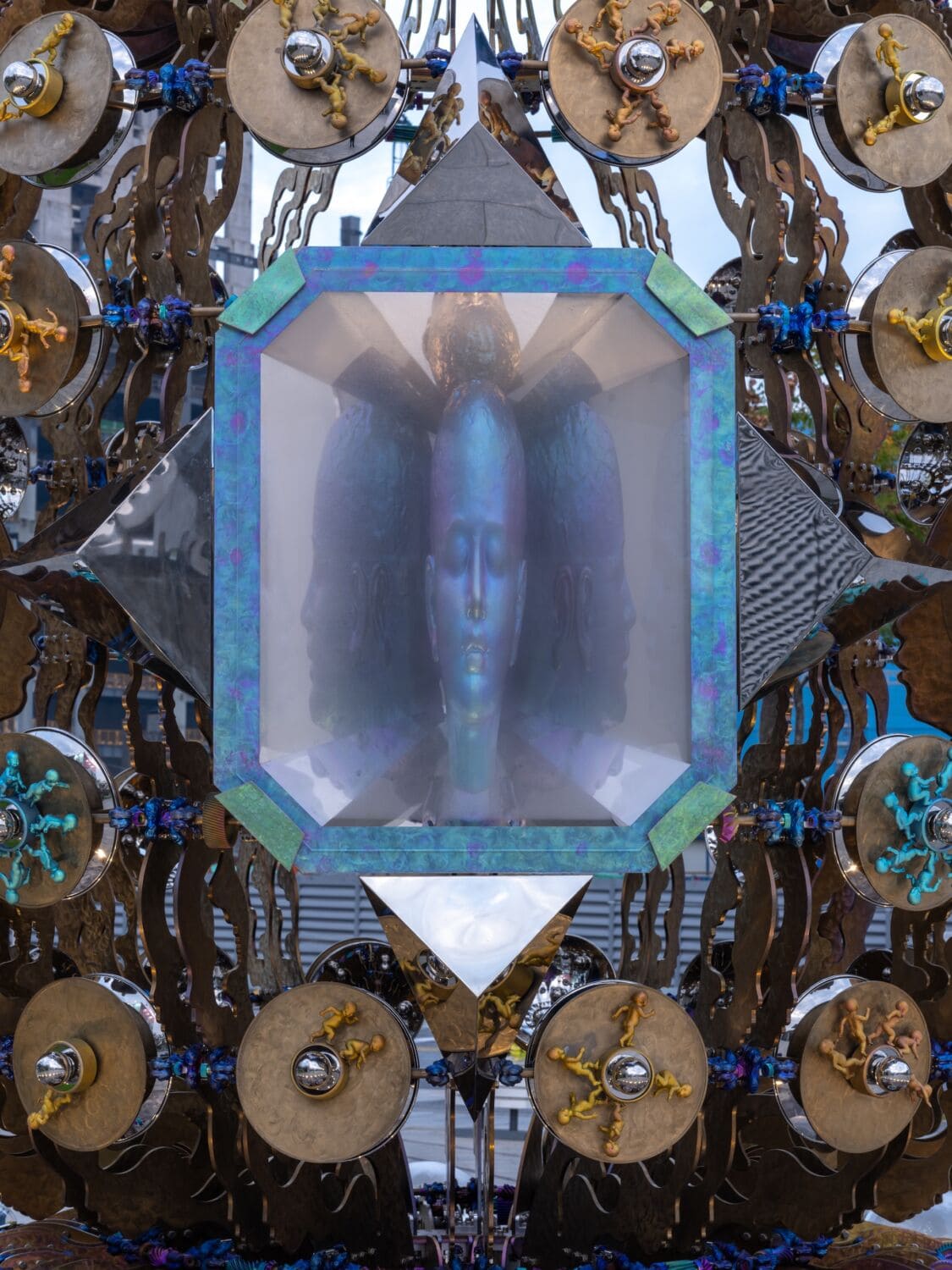
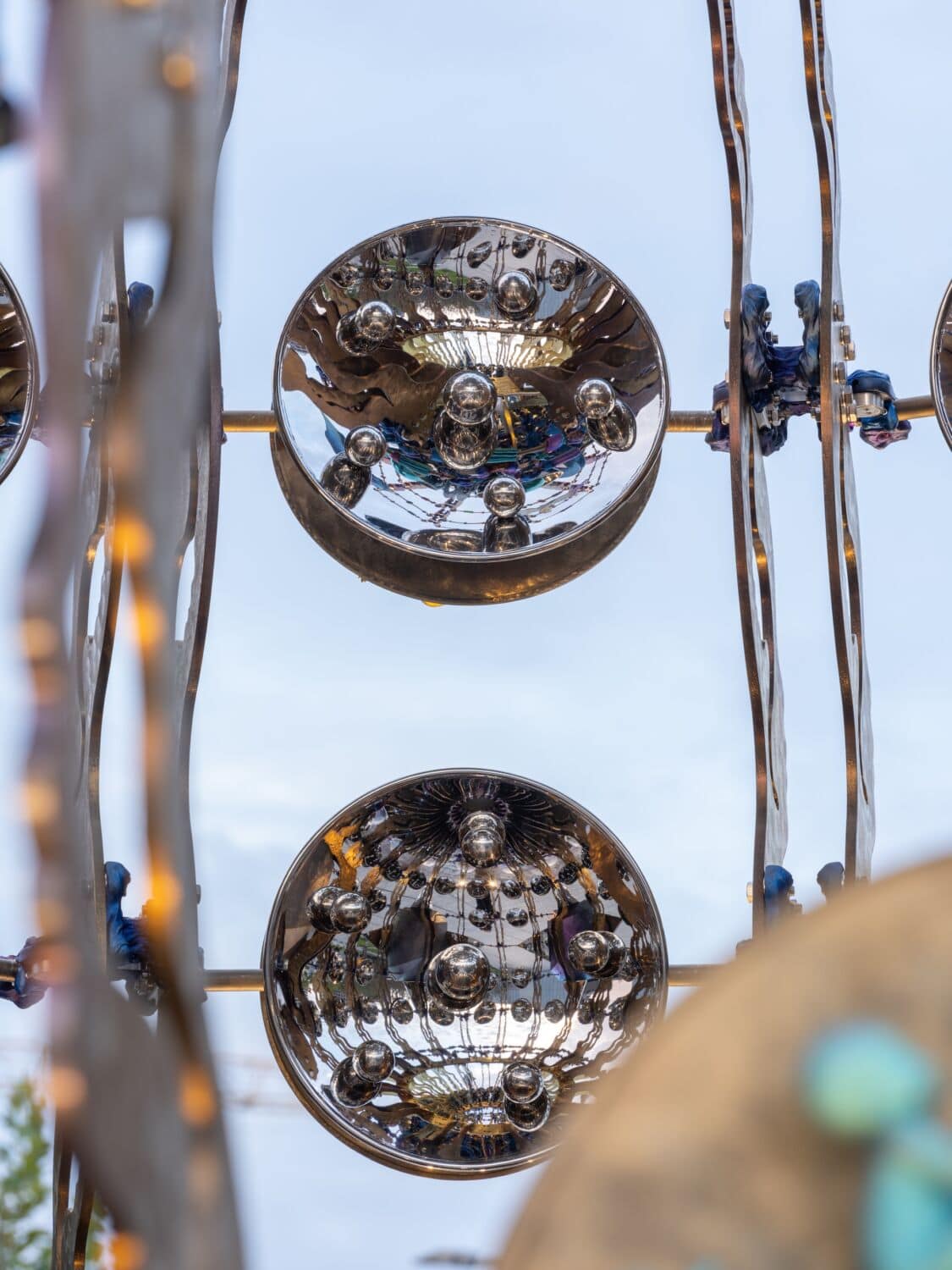
Image credit: Wallace Chan, ‘Birthday Sculpture’ (details) as part of ‘Vessels of Other Worlds’ at Long Museum.
BB: The Goddess’s nose is the first cut you make on the gemstone. Can you tell us more about that?
WC: The face inside the stone is named after the goddesses Horae from Greek mythology. They are in charge of time and the seasons.
Time has a big influence on my work because each piece I create takes time, they are works of time and also an inspiration to me.
BB: Tradition and religion are often themes found in your work. Have they shaped how you design over the years?
WC: To create something is to bring something that hasn’t been done before to life. So I have to race and compete against time, to be faster than time so that my art can exist before time has passed.
Rather than tradition which focuses on the past, or trends which focus on the present, I am more drawn to the future which focuses on the unknown. I use traditions for the foundation of my work but I’m always looking to the future and trying to arrive before it.
BB: You gave a talk at the Harvard Mineralogical and Geological Museum earlier this year, where you spoke about the unbreakable porcelain you invented. Tell us the story behind the creation of the porcelain?
WC: When I was five years old we lived with my grandmother, we had very strict rules back then. The adults in my family used porcelain spoons to eat at dinner time, while my siblings and I shared one plastic spoon between the three of us – this was so we wouldn’t finish our food too quickly. I was a very curious child, so one night I picked up the porcelain spoon and as I was looking at it, it dropped and smashed into pieces.
I ended up getting punished for my blunder which was a painful experience, however, when I got older I realised that I could redeem myself by making something better and stronger. This experience helped me create a material that was breakable yet resilient and strong – five times harder than steel, with it I can create pieces that can outlive me and exist for hundreds if not thousands of years. This makes me feel closer to eternity.

Image credit: Wallace Chan, ‘Vessels of Other Worlds’, work in progress studio portrait.
BB: One of your most famous creations is a necklace consisting of 11,551 diamonds titled ‘A Heritage in Bloom’ which was created in 2015. What was it like designing such an intricate piece of jewellery?
WC: The necklace can be worn in 27 different styles by taking out parts of it and putting them back in different ways. It was a great challenge to create the necklace, because of the structure and the engineering behind it. You have to fight gravity when you work with a diamond that size, which meant a lot of testing and trials before I figured out how to make sure the necklace stayed in place without gravity pulling on it.
BB: In regard to your most recent exhibition, what is the meaning behind the title of the ‘Vessels of Other Worlds’?
WC: Our curator James Putnam can tell you more about that, because he came up with the title.
James Putnam (exhibition curator): We were in Venice planning an exhibition in another church, while there we saw a cabinet behind the altar with a gold door in which three oil vessels – the Olea Sancta, used in Catholic ceremonies, were stored. Mr Chan was very inspired by that and thought he would recreate these three vessels but in enormous dimensions. He was also inspired by Hieronymus Bosch’s famous painting The Garden of Earthly Delights and decided to embark on his interpretation of this in a way but with a more futuristic and otherworldly approach. There’s a whole other universe in these vessels.
WC: When I saw the title proposed by James I was inspired because if there are other worlds, then there must also be my world, a link between these worlds and a way to communicate. These vessels are portals that can be used to discover other worlds.

Image credit: Wallace Chan, ‘Birthday Sculpture’ (details) as part of ‘Vessels of Other Worlds’ at Long Museum.
BB: You developed a specific way of working with titanium which you tend to use in your pieces. Can you tell us more about it? And how is it used in the pieces featured in this exhibition?
WC: The materials you use for your art also shows the spirit of your times. Titanium reflects our time but it’s also resistant and futuristic. I love to use it to create, though it is difficult to work with because it’s light in weight and also because it is close to eternity. I know that the pieces I create will outlive me and stand the test of time.
In celebration of his 70th birthday, Chan will next year unveil his next exhibition titled, ‘Vessels of Other Worlds’, consisting of two exhibitions in two cities: Venice and Shanghai. The exhibition begins in Venice on May 8th 2026 at the Chapel of Santa Maria della Pietà – coinciding with the 61st International Art Exhibition of La Biennale di Venezia. The second exhibition takes place in Shanghai, opening on July 18th 2026.


